The people who make our ambition possible
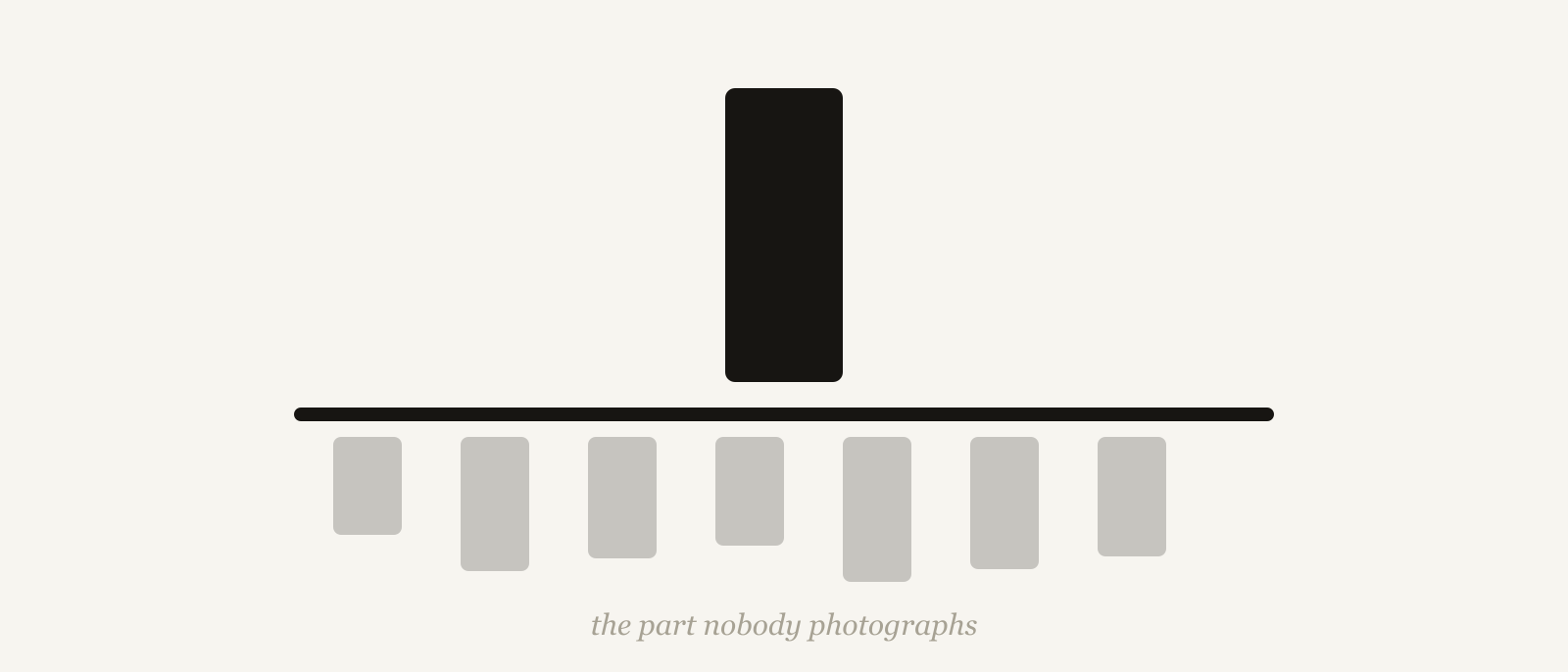
The stories we tell about ambition are almost always stories about one person. The founder in the garage. The writer at four in the morning. The engineer who would not give up. It makes for a clean narrative, and the shape of it is a lie so common that we have stopped noticing it is a shape at all.
Almost nobody builds anything alone. What actually happens is that a small number of people quietly absorb the cost of your attempt, and then, if it works, they watch you get described as self-made.
The invisible labour
It is worth naming the specific work, because it is easy to miss precisely because it does not look like work.
Somebody listens to the unfinished idea. Not the polished version you eventually tell people, but the first one, the incoherent one, at the stage where it is mostly enthusiasm and a hole where the plan should be. Listening to that without laughing is a skill, and it is the difference between an idea that gets a second draft and one that does not.
Somebody believes you before there is evidence. This is the rarest thing on the list. Belief after results is not belief, it is just observation. What matters is the person who backed you at the point where backing you was genuinely unreasonable.
Somebody gives up time. Yours, mostly. The evenings you were not there. The trip that got postponed. The conversation that got half of your attention because the other half was still debugging something. That time did not vanish, it was donated, and usually by someone who never got asked.
Somebody absorbs the stress. You come home compressed and short-tempered from a problem that has nothing to do with them, and they take the overflow, and they do not itemise it back to you later.
Somebody stays steady while you are not. Ambition makes people unreliable in small ways: distracted, self-involved, prone to talking about the same thing for eleven months. Somebody decides to keep showing up through that stretch, which is a choice they make repeatedly, not a fact about them.
The thanks that gets skipped
Here is the thing I have been thinking about most.
We are good at thanking people for celebrating our successes. The launch, the offer, the finished thing: those moments come with a natural occasion for gratitude, and everyone knows their lines.
We are much worse at thanking people for surviving the version of us that existed while we were trying to get there. That version was harder to be around. That version cancelled things. That version was, at times, not much fun and not fully present, and somebody stayed anyway, and by the time the good news arrives everyone has silently agreed to skip over that part.
But that is the part that cost something. The celebration was easy. The eleven months before it were the actual contribution.
A debt you cannot itemise
The uncomfortable part is that you cannot square this up. There is no invoice. You cannot pay back the hours of listening or the years of belief, and any attempt to do it in one gesture, the big dinner, the expensive gift, is mostly for you rather than for them.
What you can do is smaller and more annoying, because it has to be ongoing.
You can say it out loud, specifically, and not only when you are winning. Vague gratitude does almost nothing. “Thank you for that year when I was impossible and you did not leave” lands in a way that “thanks for everything” never will, because it demonstrates that you actually saw what happened.
You can tell the story correctly in public. When somebody asks how you built the thing, resist the solitary version. It costs you a small amount of mythology and returns something real to the people who earned it.
And you can be that person for someone else, which is probably the only honest form of repayment available. Somebody is currently sitting on an idea with a hole where the plan should be and no evidence at all. Listen to that one.
The photograph
Every success has a photograph, and the photograph has one person in it.
Standing just outside the frame is the person who read the first draft, the one who covered rent that month, the friend who took the call at midnight, the parent who did not say the discouraging thing they were thinking. They are not in the picture. They are what the picture is standing on.
If you have people like that, tell them while they are still around to hear it. The moment you can afford to acknowledge them is exactly the moment it is easiest to forget.
No account, no tracking. One vote per reader.