Almost 25, and apparently I should know what I am doing
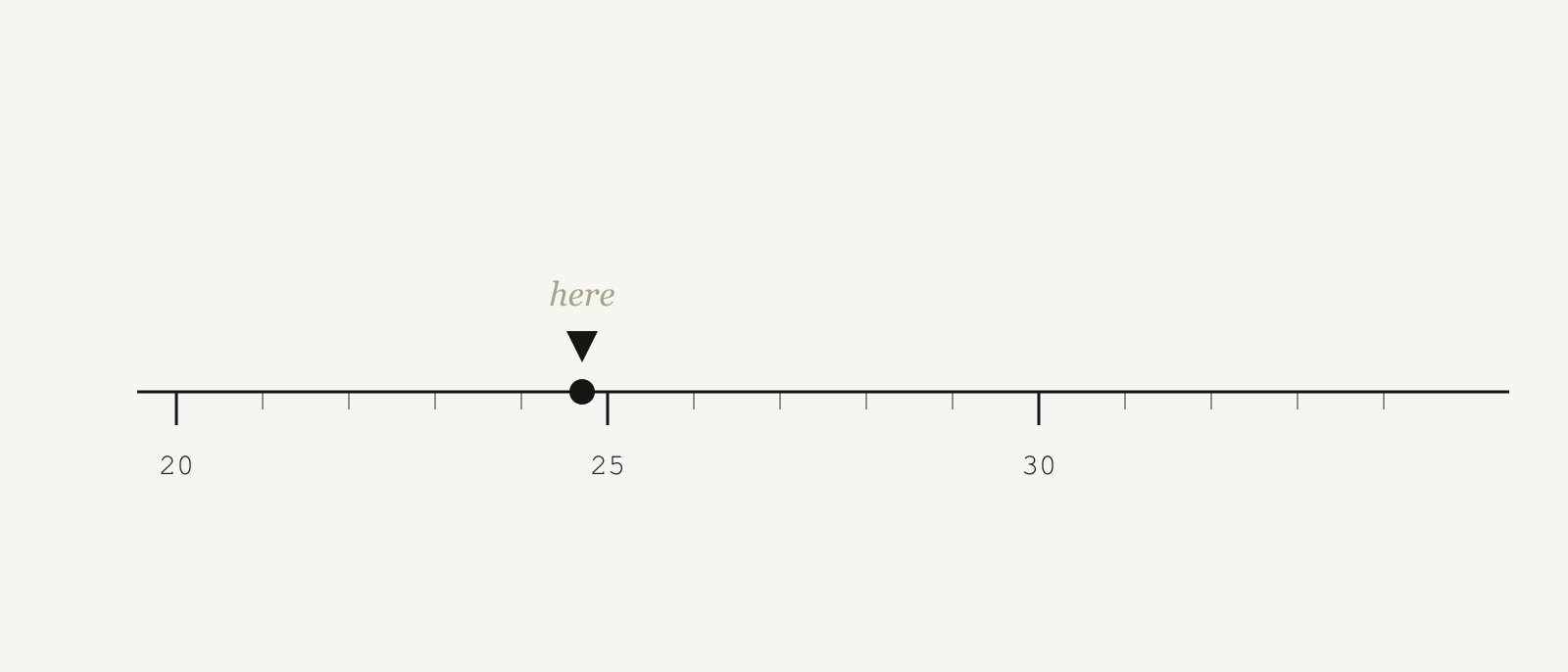
When I was younger I assumed that twenty-five-year-olds knew what they were doing. This was based on almost no evidence. Mostly it was that they spoke confidently and owned things like blenders.
I am now close enough to twenty-five to report that confidence and clarity are not the same thing, and that the blender was bought in a hurry because someone was coming over.
The list
There is a list of things you are supposed to have assembled by now, and nobody has ever printed it, which is part of its power. As far as I can reconstruct it, the mid-twenties require: direction, financial sense, a career with visible momentum, emotional maturity, a healthy relationship or a dignified explanation for the absence of one, some kind of fitness practice, a skincare routine, at least one friendship you actively maintain rather than merely preserve, and a ready answer to where you see yourself in five years.
I would like to meet the person holding all nine of those simultaneously. I suspect they are holding four of them and are extremely well lit.
The five-year question
The five-year question deserves special attention, because it is the only interview question that is also asked at weddings.
Nobody wants the true answer, which for most people is some version of: I would like to be doing work I do not resent, near people I love, with slightly less anxiety about money than I have currently. That is a completely reasonable set of goals and it will get you a polite nod and a change of subject, because what is actually being requested is a plan, delivered with the cadence of someone who has one.
So we perform. We produce a tidy trajectory. And the strange part is that everybody in the room is performing too, which means we have collectively agreed to grade each other on a skill nobody has, using answers nobody believes.
What confidence actually is
The most useful thing I have learned approaching this age is that almost everyone is making decisions with incomplete information and hoping their confidence reads as competence from a distance.
This sounds cynical. I mean it as a relief.
For years I assumed there was a category of person who had the full picture, and that I was outside it, and that admission to it happened at some threshold I had not reached. Getting close enough to look inside has been genuinely freeing. The people who look certain are, in the main, people who have gotten comfortable acting without certainty. That is a real skill and it is worth learning. It is just not the same skill as knowing.
Once you see it, you also stop mistaking other people’s pace for a verdict on yours. Someone bought a house at twenty-four. Someone got married. Someone has a job title that makes sense to relatives. None of that is evidence about you. Some of it is not even evidence about them.
The part that is actually true
I do not want to spend the whole essay dismantling the pressure, because a small part of it is real and I would be lying if I pretended otherwise.
Your decisions do start to compound around now. Not in a doomed way, but in an interest-bearing way. The skills you pick up this year get five more years of use than the ones you pick up at thirty. The habits are easier to set now than to reset later. The relationships you actually maintain are the ones that will be there in a decade, and maintenance is unglamorous and nobody is going to remind you.
So the honest position is somewhere in the middle. You do not need a plan. You probably do need a direction, which is a much cheaper thing to have. A direction is just a claim about what you would like more of, and it survives being wrong.
Twenty-five
Mostly what I have concluded is that twenty-five is a number with unusually good public relations. It is a round, cinematic, milestone-shaped age, and it has convinced several generations that it constitutes a deadline.
It is a Tuesday. It arrives whether or not the list is complete. And the people I know who seem most at ease with themselves are not the ones who finished the list on time. They are the ones who read it once, noticed nobody had signed it, and put it down.
No account, no tracking. One vote per reader.