The correct way to eat suya
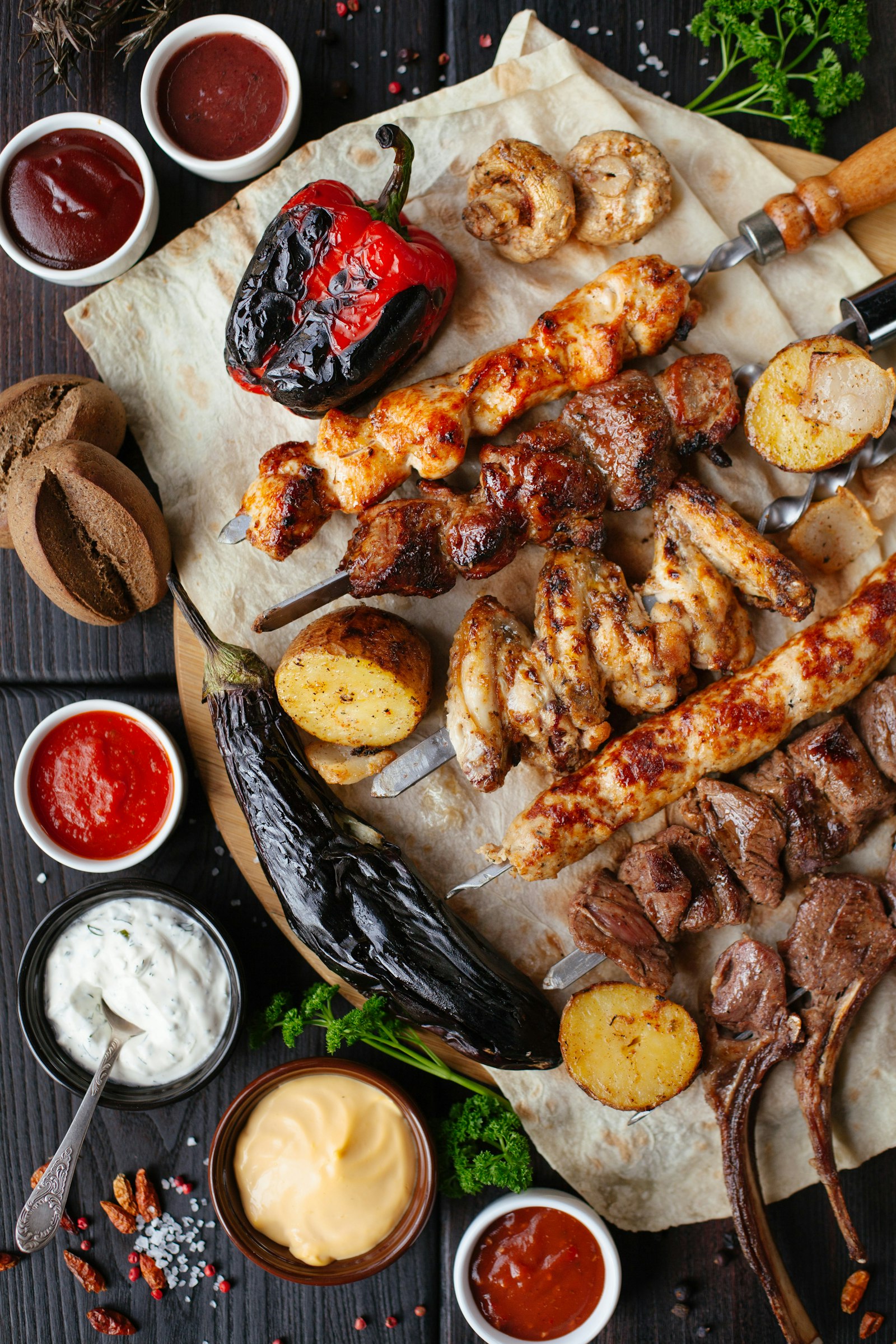
I hold my technical opinions loosely. Show me a benchmark and I will change my mind about a database before lunch. My opinions about suya are not like that. They are load-bearing, they are non-negotiable, and I have lost friendships over rule six.
Suya, if you have somehow gone your whole life without it, is meat on a stick, grilled over open fire, dressed in a spice mix called yaji that is built on groundnut and pepper and a quiet threat. That description is accurate and tells you almost nothing, because suya is less a food than a set of circumstances that happen to include meat.
Here is how it is done.
Rule one: never before dark
Suya has an hour and that hour is not four in the afternoon. Daylight suya is a rehearsal. The thing you are buying at seven in the evening is not what will exist at ten, when the fire has been going all day and the grill has learned something. Anyone selling suya at noon is selling grilled meat, which is a fine and different product.
Rule two: the mallam knows better than you
Do not order like a man reading a menu. Ask what is good tonight. The person at the grill has been watching those skewers for hours and has opinions about which of them are ready, and the entire transaction improves the moment you make it clear you are taking advice rather than issuing instructions. This is true of suya and, it turns out, most things.
Rule three: the meat is a delivery mechanism
The yaji is the point. The meat is structural. Once you accept this, everything else about suya makes sense, including why two pieces from the same skewer can be completely different experiences, and why the last few crumbs at the bottom of the paper are worth the undignified thing you are about to do to get them.
Rule four: the onions are not garnish
The raw onion is a palate reset between bites, and it is doing more work than anyone credits it for. The tomato is theatre. I eat it, I enjoy it, I acknowledge it contributes nothing. Cabbage, where it appears, is a regional variation I have made peace with.
Rule five: eat it standing, near where it was made
This is the rule that turns suya from food into an event. You eat it out of the paper, on your feet, within a short walk of the fire, ideally with someone whose company survives a five-minute silence. Sitting suya, plated suya, suya arriving on a tray with a fork beside it: these are museum exhibits of suya. The label is right and the exhibit is dead.
Rule six: do not order heat you cannot carry
“Extra yaji” is a test, and you should take it honestly. There is no glory in ordering a level of pepper that turns the next twenty minutes into a medical event you have to narrate cheerfully. I have watched grown men order extra yaji to impress a table and then conduct the rest of the evening entirely through their eyes. The mallam knows. The mallam always knows. He will give you what you asked for, with a face.
Rule seven: it does not travel
Twenty minutes in a car and you no longer have suya. You have something warm in paper that is thinking about becoming steam, and it is sad in a way that is genuinely disproportionate. Suya is one of the few foods that is actually worse as leftovers than the memory of it is as a story. Buy the amount you will finish standing there. Buy it twice if you must.
Rule eight: take the piece he hands you
You do not really queue for suya. What you do is stand there while he works: pulling the skewers off the fire, chopping on the board, dressing it with more yaji, folding the paper into a parcel. And somewhere in the middle of all that, without any ceremony at all, he hands you a piece.
Take it. Eat it right there, standing, while he carries on chopping. That piece is not a free sample and it is not politeness. It is the meat at its actual peak, hotter and better than anything that will survive the walk to the car, and it is the only moment in the entire transaction where you get suya in its ideal state.
It is also the only quality control on offer, running in the opposite direction to how these things usually go. You are being shown exactly what you are buying before you have paid for it. Nobody hands you a taste of something they are worried about.
The actual point
All eight rules collapse into one: suya cannot be optimised. It cannot be delivered, scaled, improved by convenience, or successfully rescheduled to a time that suits you better. Every attempt to make it easier makes it worse, at a rate that feels almost designed to teach you something.
We spend most of our lives removing friction from things. It is worth keeping a few things that require you to be somewhere, at a particular hour, standing up, with your hands dirty and nowhere else to be. Suya is mine.
No account, no tracking. One vote per reader.